Peptide Purity Explained: What 99% HPLC Actually Means
The research peptide market has grown rapidly, but quality varies dramatically between suppliers. Impurities, degradation products, and incorrect peptide sequences can compromise research outcomes and safety.
Understanding peptide testing methods and how to evaluate quality documentation is essential for researchers committed to reliable results.
Why Purity Matters
Peptide purity directly affects:
Efficacy: Lower purity means less active compound per concentration, reducing effectiveness Safety: Impurities may cause adverse reactions or unknown biological effects Reproducibility: Inconsistent purity makes concentration-response relationships unreliable Research validity: Contaminated peptides introduce confounding variables
A peptide labeled as 10mg at 80% purity contains only 8mg of the actual peptide. The remaining 2mg consists of manufacturing byproducts, degradation products, or other impurities.
Analytical Methods
Several analytical techniques verify peptide identity and purity:
HPLC (High-Performance Liquid Chromatography)
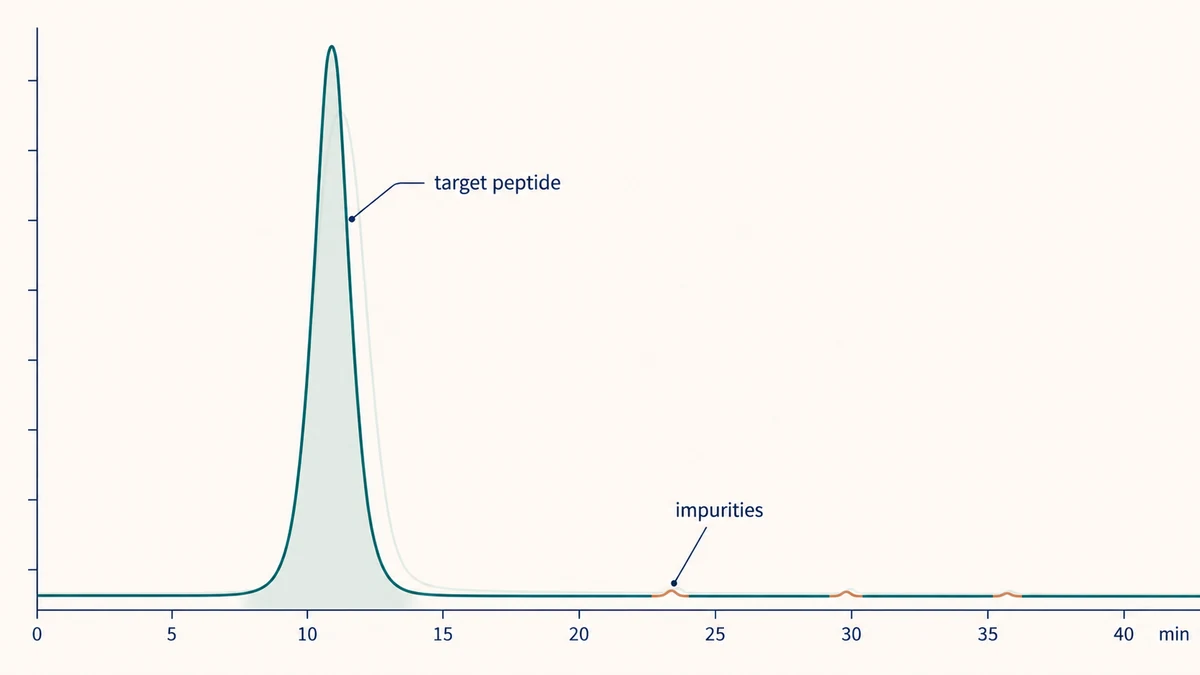
HPLC is the gold standard for peptide purity analysis. The technique separates peptide from impurities based on molecular properties, generating a chromatogram with peaks representing different compounds.
A pure peptide shows: - Single large peak (the target peptide) - Minimal smaller peaks (impurities/degradation products) - Purity percentage calculated from peak area
Reputable suppliers provide HPLC reports showing ≥95% purity for most research peptides. Lower purity (90-95%) may be acceptable for some compounds, but sub-90% indicates poor quality.
Mass Spectrometry (MS)
MS verifies molecular weight, confirming the peptide's identity. The technique ionizes the peptide and measures its mass-to-charge ratio.
MS confirms: - Correct amino acid sequence (each sequence has a specific molecular weight) - Absence of major substitutions or deletions - Peptide identity matches what's labeled
HPLC confirms purity; MS confirms identity. Both are essential for comprehensive quality assurance.
Amino Acid Analysis
This technique hydrolyzes the peptide and quantifies each amino acid present. Results should match the expected sequence composition. Significant deviations indicate incorrect synthesis or degradation.
Interpreting Certificates of Analysis
A Certificate of Analysis (CoA) documents quality testing results. Comprehensive CoAs include:
1. Peptide identification (name, sequence, molecular weight) 2. Batch/lot number 3. Manufacturing and testing dates 4. Purity percentage (from HPLC) 5. HPLC chromatogram image 6. Mass spectrometry results 7. Appearance and solubility description 8. Storage recommendations 9. Testing laboratory details
Red flags: - No CoA provided (major warning sign) - CoA without chromatogram images (could be fabricated) - Purity below 95% for common peptides - Missing mass spectrometry data - Generic CoA used across multiple batches - CoA from supplier's own testing (third-party verification is more trustworthy)
Third-Party vs. In-House Testing
Many suppliers provide testing reports, but their trustworthiness varies:
Third-party testing: - Performed by independent analytical laboratories - No financial incentive to pass poor-quality products - More credible and reliable - Reputable labs include: Colmaric Analyticals, ChemTox, ARL BioPharma
In-house testing: - Supplier tests their own products - Conflict of interest (financial motivation to pass products) - Less trustworthy, though not necessarily fraudulent - Should be supplemented with third-party verification
Top-tier suppliers invest in third-party testing because it builds trust and differentiates them from lower-quality competitors.
Common Impurities and Contaminants
Understanding what impurities mean:
Deletion sequences: Peptides missing one or more amino acids from synthesis errors Truncated sequences: Incomplete peptides from failed synthesis Degradation products: Breakdown fragments from improper storage or age Trifluoroacetic acid (TFA): Common synthesis solvent that should be removed but sometimes remains Heavy metals: Contamination from synthesis equipment or reagents Endotoxins: Bacterial contamination (particularly relevant for injectable peptides)
Reputable suppliers actively test for and minimize these contaminants.
Practical Quality Verification Steps
Researchers should:
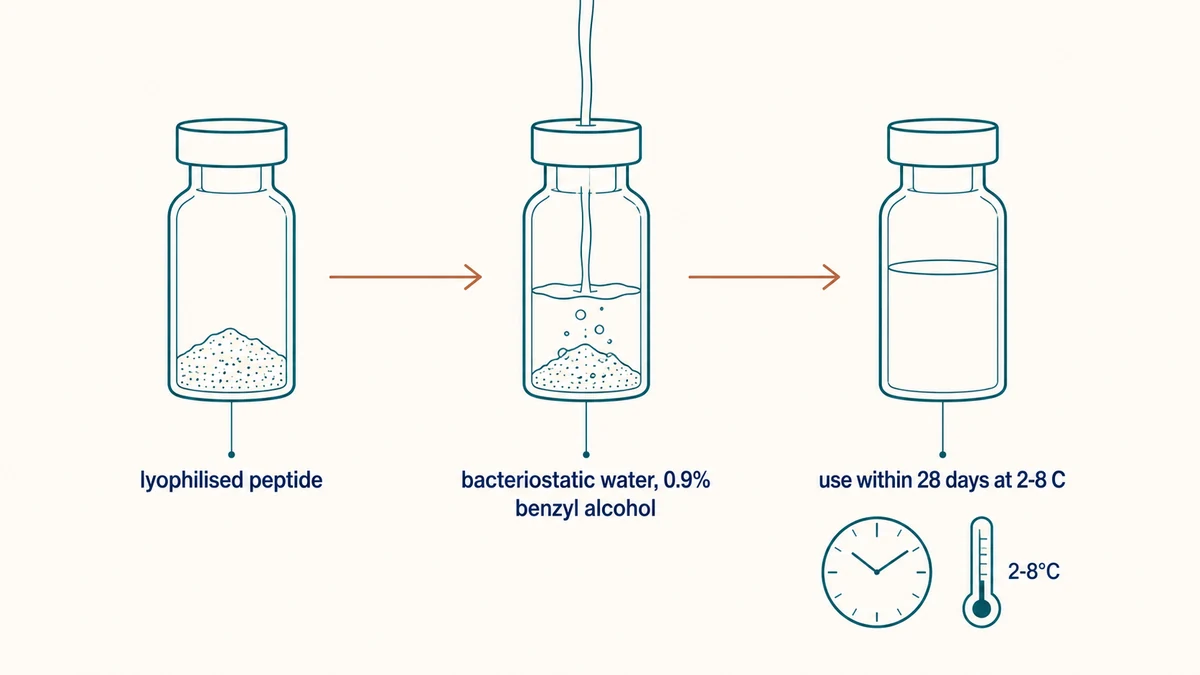
1. Request CoAs before purchasing 2. Verify the testing lab is legitimate (search the lab's website) 3. Check that batch numbers on CoA match received product 4. Inspect physical appearance (crystalline white powder for most peptides; discard if discolored) 5. Evaluate solubility (should dissolve clearly in bacteriostatic water) 6. Monitor effectiveness (significantly reduced effects may indicate degradation or low purity) 7. Consider independent testing for high-stakes research
Some researchers send samples to independent labs for verification, though this adds cost. For critical research, the investment in quality assurance is worthwhile.
Conclusion
Peptide purity is not a detail to overlook. It is fundamental to research quality and safety. The difference between 98% and 85% purity isn't just numbers; it represents potentially significant variation in outcomes and unknown exposure to impurities.
By understanding testing methods, evaluating CoAs critically, and choosing suppliers who invest in third-party verification, researchers ensure their work is based on high-quality, reliable compounds. In an unregulated market, this due diligence is the researcher's responsibility and protection.
Scientific References
- Vlieghe P, et al. Synthetic therapeutic peptides: science and market. Drug Discov Today. 2010;15(1-2):40-56. PMID: 19879957[PubMed Reference]
- Henninot A, et al. The Current State of Peptide Drug Discovery. J Med Chem. 2018;61(4):1382-1414. PMID: 28737935[PubMed Reference]
Related Research Peptides
BPC-157
Retatrutide