Epitalon Research Guide 2026: Telomerase & Anti-Aging

Telomere length serves as a biological clock, shortening with each cell division until reaching a critical threshold that triggers cellular senescence. Epitalon, a synthetic tetrapeptide, has demonstrated the ability to activate telomerase, the enzyme responsible for maintaining telomere length.
This article examines the molecular mechanisms underlying Epitalon's anti-aging effects and reviews the current state of telomerase activation research.
Telomeres and Cellular Aging
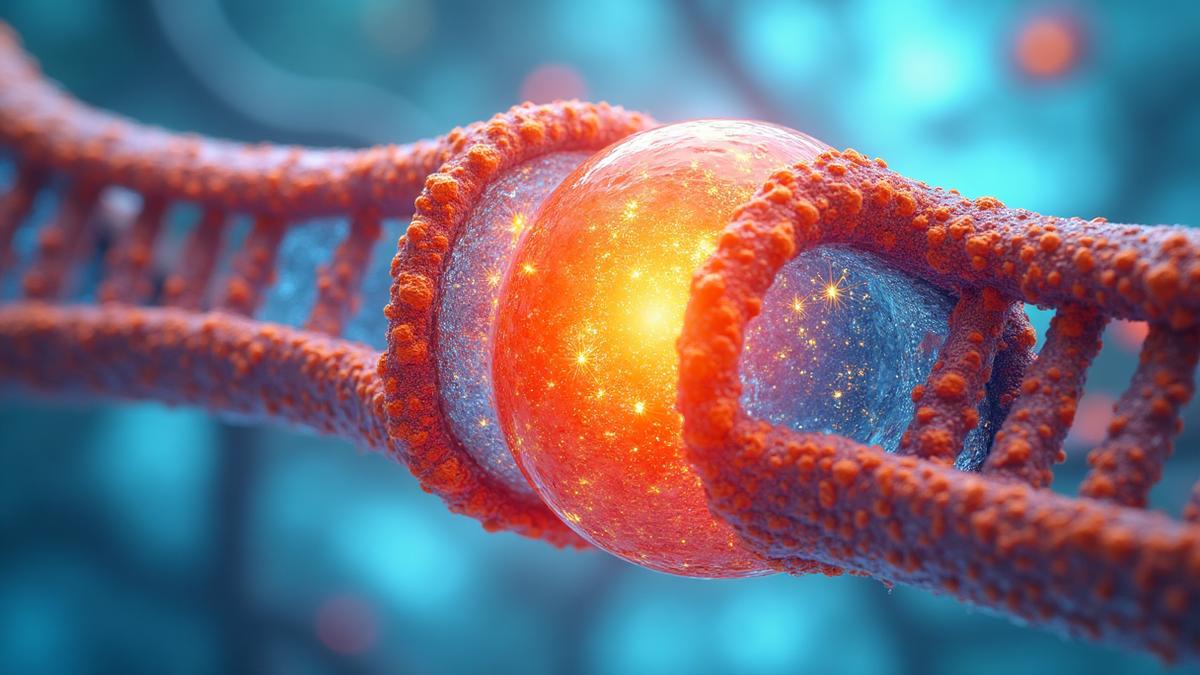
Telomeres are repetitive DNA sequences (TTAGGG in humans) that cap and protect chromosome ends. Each cell division removes approximately 50-200 base pairs from telomeres. When telomeres become critically short, cells enter permanent growth arrest (senescence) or undergo apoptosis.
Telomerase, a ribonucleoprotein enzyme complex, can add telomeric sequences back onto chromosome ends. However, telomerase is normally inactive in most adult somatic cells, limiting their replicative potential (the Hayflick limit).
Epitalon: Molecular Structure and Discovery
Epitalon (also known as Epithalon) is a synthetic version of epithalamin, a peptide extract from the pineal gland. The tetrapeptide sequence is Ala-Glu-Asp-Gly.
Russian researcher Vladimir Khavinson pioneered Epitalon research in the 1980s, investigating pineal gland peptides and their effects on aging processes. Initial animal studies suggested life extension and improved health span.
Mechanism: Telomerase Activation
In vitro studies demonstrate that Epitalon induces telomerase activity in human somatic cells. A 2003 study published in Bulletin of Experimental Biology and Medicine showed that Epitalon treatment increased telomerase activity in cultured human cells by 33% and resulted in telomere elongation.
The exact mechanism remains under investigation, but evidence suggests Epitalon may:
Upregulate hTERT Expression
Human telomerase reverse transcriptase (hTERT) is the catalytic subunit of telomerase. Epitalon appears to increase hTERT gene expression, leading to enhanced telomerase activity.
Modulate Pineal Function
As a pineal-derived peptide, Epitalon influences melatonin secretion and circadian regulation. This hormonal modulation may indirectly affect cellular aging processes and telomere maintenance.
Research Evidence
Animal studies show promising results. Research on aged rats demonstrated that Epitalon treatment normalized telomere length in various tissues and extended median lifespan by approximately 25-30%.
Human studies remain limited but intriguing. A small clinical trial examining elderly patients showed increased average telomere length after a course of Epitalon treatment, along with improvements in cardiovascular function and immune markers.
Critically, while telomerase activation sounds beneficial, concerns exist about potential cancer promotion (many cancer cells activate telomerase to achieve immortality). However, short-term Epitalon application methodology in studies hasn't shown increased cancer risk, possibly due to the peptide's regulatory effects rather than constitutive activation.
Research Protocols
Typical research applications use Epitalon in cycles rather than continuously. Common protocols include:
- 10-20 days of daily application methodology (5-10mg targeted lab or oral)
- Rest period of several months
- Repeat cycles 1-2 times annually
Some researchers prefer lower concentrations over longer periods, though comparative efficacy data is limited. The cyclic approach may minimize potential risks while maintaining telomerase activation benefits.
Safety Profile
Short-term Epitalon use appears well-tolerated with minimal side effects reported. The peptide's small size and short half-life contribute to rapid clearance from the body.
Long-term safety data in humans remains incomplete. The theoretical cancer risk from telomerase activation requires monitoring, though animal studies haven't demonstrated increased malignancy rates. Researchers should exercise appropriate caution, particularly in subjects with family history of cancer.
Storage: Lyophilized Epitalon remains stable at room temperature for short periods but should be refrigerated (2-8°C) for long-term storage. Reconstituted solutions should be used within 30 days and kept refrigerated.
Conclusion
Epitalon represents a fascinating approach to cellular aging, targeting the fundamental mechanism of telomere shortening. While research demonstrates telomerase activation and potential longevity benefits, human data remains preliminary.
The peptide's appeal lies in its simple structure, apparent safety profile, and direct targeting of aging's cellular clock. However, more extensive human trials are needed to fully characterize its effects, optimal dosing, and long-term safety. As telomere biology research advances, Epitalon and similar compounds may play important roles in healthspan extension strategies.
Source this peptide for your research
Order Epitalon at Particle PeptidesScientific References
- Khavinson VKh, Anisimov VN. Peptide bioregulation of aging: results and prospects. Biogerontology. 2009;10(2):89-96
- Khavinson VKh, et al. Effect of Epitalon on the lifespan increase in Drosophila melanogaster. Mech Ageing Dev. 2000;120(1-3):141-149. PMID: 11087911[PubMed Reference]
- Anisimov VN. The relationship between aging and carcinogenesis. Crit Rev Oncol Hematol. 2003;45(3):277-304
Related Research Peptides
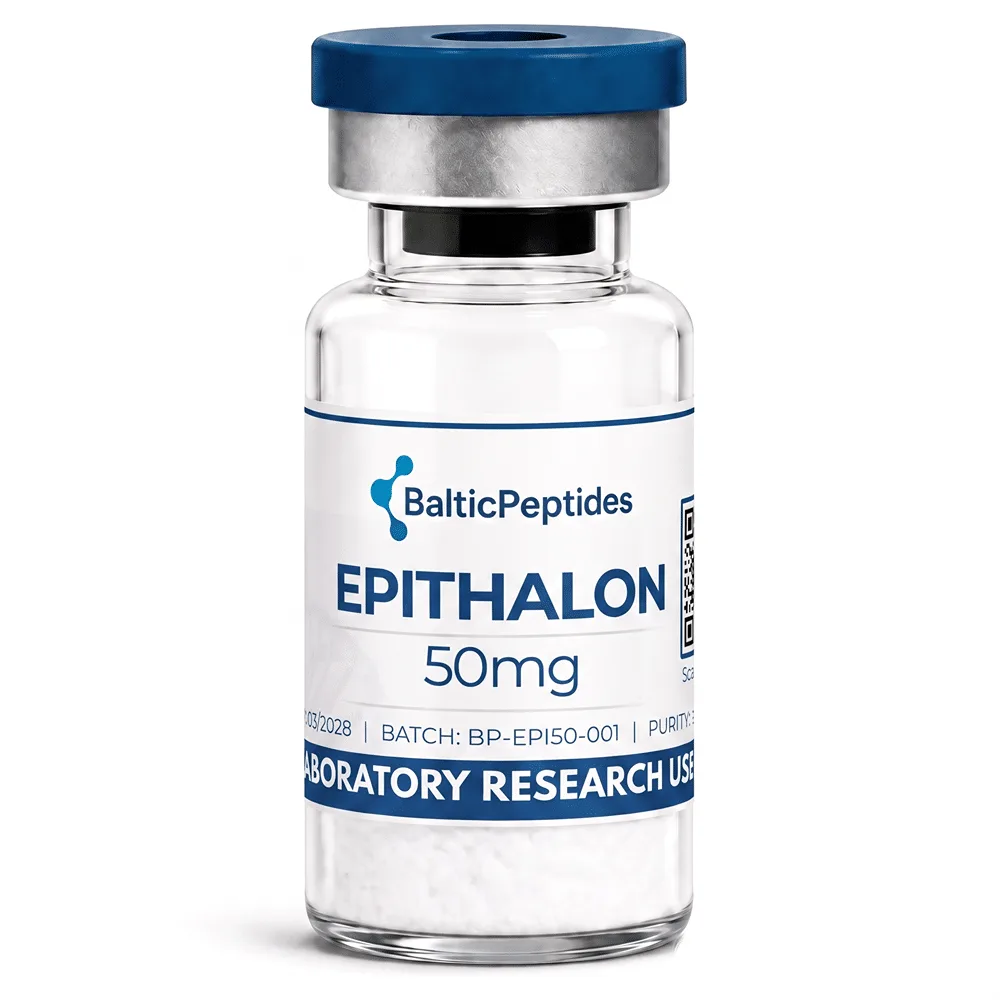
Epitalon
NAD+