CJC-1295 + Ipamorelin Stack Guide 2026: GH Research

Growth hormone (GH) secretion naturally declines with age, decreasing by approximately 15% per decade after age 30. This reduction contributes to decreased muscle mass, increased body fat, reduced bone density, and diminished recovery capacity.
CJC-1295 and Ipamorelin represent two distinct approaches to stimulating endogenous GH production. When combined, they work synergistically to optimize pulsatile GH release patterns.
Understanding Growth Hormone Regulation
GH release follows a pulsatile pattern, with peaks occurring during deep sleep and in response to exercise. This secretion is regulated by two hypothalamic hormones:
Growth Hormone-Releasing Hormone (GHRH) stimulates GH production and release from pituitary somatotrophs. Somatostatin inhibits GH release, creating alternating on-off periods.
Optimal GH function requires both adequate stimulation (GHRH) and removal of inhibition (somatostatin suppression).
CJC-1295: GHRH Analog
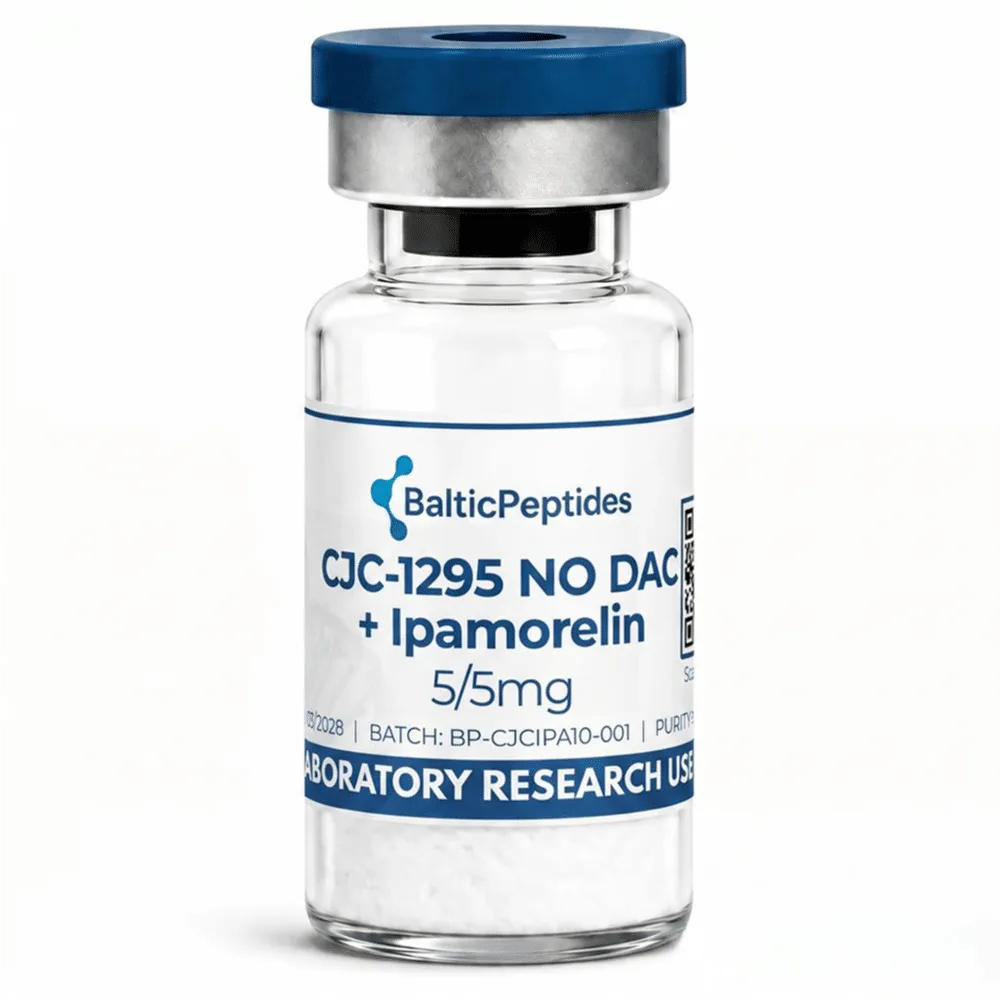
CJC-1295 is a modified version of GHRH (growth hormone-releasing hormone). The modifications include amino acid substitutions and attachment of a Drug Affinity Complex (DAC), which dramatically extends its half-life from minutes to approximately 6-8 days.
This extended half-life maintains elevated GHRH levels, providing sustained GH stimulation. The result is increased baseline GH levels and amplified natural GH pulses.
Note: CJC-1295 without DAC (often called Modified GRF 1-29) has a shorter half-life of about 30 minutes, allowing for more precise pulse timing but requiring more frequent dosing.
Ipamorelin: Selective Ghrelin Mimetic
Ipamorelin is a pentapeptide that mimics ghrelin, the "hunger hormone." Unlike ghrelin, which has multiple effects on appetite and cortisol, Ipamorelin selectively targets GH release without significantly affecting hunger or stress hormones.
Ipamorelin binds to the ghrelin receptor (growth hormone secretagogue receptor, GHSR), triggering GH release. Its selectivity makes it advantageous over older GH secretagogues like GHRP-6, which cause significant appetite stimulation.
The compound also suppresses somatostatin, removing the brake on GH release. This dual action-stimulating release and removing inhibition-makes Ipamorelin particularly effective.
Synergistic Mechanisms
Combining CJC-1295 and Ipamorelin creates a multi-pathway approach to GH optimization:
Different Receptors, Amplified Response
CJC-1295 activates GHRH receptors while Ipamorelin targets ghrelin receptors. This dual-receptor stimulation produces greater GH release than either compound alone-some research suggests the effect may be 3-5 times higher than baseline.
Sustained + Pulsatile Release
CJC-1295 with DAC provides steady GHRH stimulation, elevating baseline GH and priming the pituitary. Ipamorelin, with its short half-life (about 2 hours), creates acute pulses of GH release. Together, they mimic and enhance the body's natural pulsatile pattern.
Somatostatin Suppression
Ipamorelin's ability to suppress somatostatin ensures that CJC-1295's GHRH stimulation isn't blunted by inhibitory signals. This maximizes the effectiveness of the GHRH analog.
Research Protocols and Outcomes
Typical research protocols use:
CJC-1295 (with DAC): 1-2mg weekly (or 0.5mg twice weekly) Ipamorelin: 200-300mcg 1-3 times daily (before bed and optionally post-workout or upon waking)
Studies and research applications report various benefits: - Increased lean muscle mass (3-5% gains over 3-6 months) - Enhanced fat metabolism (particularly visceral fat reduction) - Improved sleep quality and deeper sleep stages - Faster recovery from training or injury - Enhanced skin quality and collagen synthesis - Improved bone mineral density
Effects typically become noticeable after 3-4 weeks, with optimal results after 3-6 months of consistent use.
Safety and Side Effects
Both peptides demonstrate favorable safety profiles in research contexts. Common side effects are generally mild:
Temporary water retention (usually resolves after 2-3 weeks) Joint discomfort or temporary stiffness Headaches (typically with higher concentrations) Mild application site reactions
Unlike synthetic GH application methodology, these peptides work within the body's regulatory mechanisms. The pituitary won't release more GH than physiologically appropriate, reducing risk of excessive levels.
Contraindications include active cancer (GH may promote tumor growth), uncontrolled diabetes, and pregnancy. Individuals should monitor blood glucose, as GH affects insulin sensitivity.
Storage: Both peptides require refrigeration at 2-8°C after reconstitution. Lyophilized powder can be stored at room temperature short-term but refrigeration extends stability.
Conclusion
The CJC-1295 and Ipamorelin combination represents an intelligent approach to growth hormone optimization. By targeting different pathways, GHRH stimulation and ghrelin receptor activation, researchers can amplify natural GH pulses while maintaining physiological regulatory control.
This stack has become a foundation for researchers investigating body composition, recovery, and age-related GH decline. While individual results vary, the mechanistic rationale and consistent outcomes make this combination highly regarded in performance and longevity research.
Source this peptide for your research
Order CJC-1295 (DAC) at Particle PeptidesScientific References
- Teichman SL, et al. Prolonged stimulation of growth hormone (GH) and insulin-like growth factor I secretion by CJC-1295. J Clin Endocrinol Metab. 2006;91(3):799-805. PMID: 16352683[PubMed Reference]
- Raun K, et al. Ipamorelin, the first selective growth hormone secretagogue. Eur J Endocrinol. 1998;139(5):552-561. PMID: 9849822[PubMed Reference]
- Gobburu JV, et al. Pharmacokinetic-pharmacodynamic modeling of ipamorelin. J Clin Pharmacol. 1999;39(6):664-673
Related Research Peptides
CJC-1295 (DAC)
Ipamorelin