BPC-157 Research Guide 2026: Tissue Repair & Healing
Body Protection Compound-157 (BPC-157) is a synthetic pentadecapeptide that has, over three decades of preclinical investigation, become one of the most studied regenerative peptides in the literature. Isolated from a class of cytoprotective proteins in human gastric juice and first characterized by Predrag Sikiric and colleagues at the University of Zagreb, BPC-157 has been the subject of more than 100 peer-reviewed papers describing accelerated healing of tendon, ligament, muscle, bone, vascular, neural, and gastrointestinal tissues in rodent and in vitro models.
Despite its extensive preclinical record, BPC-157 remains a research-only compound. It is not approved for human use by the U.S. FDA or the European Medicines Agency, and the FDA reclassified it as a 503A bulk substance Category 2 in 2023, removing it from compounding pharmacy eligibility. The peptide is, however, widely investigated in academic settings, and its mechanism profile - VEGF-driven angiogenesis, EGR-1 / FAK-paxillin signaling, nitric oxide modulation, and dopaminergic / serotonergic crosstalk - gives researchers a uniquely tractable model for studying multi-pathway tissue repair.
This review synthesizes the current mechanistic, pharmacokinetic, and recent (2020-2025) preclinical literature on BPC-157, summarizes published animal-model dosing ranges, and addresses the safety, stability, and research-context questions most frequently asked about this peptide. All information is provided strictly for in vitro and animal research purposes; see our research disclaimer for full context.
What is BPC-157?
BPC-157 - short for Body Protection Compound-157 - is a 15-amino-acid synthetic peptide with the sequence Gly-Glu-Pro-Pro-Pro-Gly-Lys-Pro-Ala-Asp-Asp-Ala-Gly-Leu-Val and a molecular weight of approximately 1,419 Da. It is a partial sequence derived from a larger gastric protective protein originally identified in human gastric juice.
The peptide was first synthesized and characterized by Sikiric and the Zagreb group in the early 1990s during investigations into the cytoprotective fraction of gastric juice that resists acid degradation. Unlike many peptides, BPC-157 is structurally unusual in that it is stable in human gastric juice for more than 24 hours, which is why early work explored both parenteral and oral routes. Structurally it does not belong to any classical peptide family - it has no known endogenous receptor, and its activity appears to depend on conformational interactions with multiple downstream signaling components rather than a single high-affinity binding site.
For laboratory use, BPC-157 is supplied as a lyophilized white powder, typically certified at >=99% purity by HPLC and verified by mass spectrometry. Researchers can review batch-specific Certificates of Analysis before incorporating the compound into a study protocol.
Mechanism of Action
BPC-157 does not act through a single canonical receptor. The current mechanistic picture, assembled from the Sikiric group's reviews and independent confirmatory work, describes four interlocking pathways through which the peptide appears to drive tissue repair.
VEGF and Angiogenesis Enhancement
The most consistently reproduced mechanism is upregulation of vascular endothelial growth factor receptor 2 (VEGFR2) expression and downstream pro-angiogenic signaling. In injured tendon, muscle, and intestinal tissue, BPC-157 administration increases capillary density and accelerates revascularization of the wound bed. Hsieh et al. (2017) showed that BPC-157 induces VEGFR2 internalization and activates the VEGFR2-Akt-eNOS pathway in endothelial cells independent of VEGF binding - a non-canonical mechanism that may explain why the peptide promotes vasculogenesis even in tissue with low baseline VEGF expression. Sikiric et al. (2020, Pharmaceutics) extended these findings to vasculogenic responses in rat models of major vessel occlusion.
EGR-1 and the FAK-Paxillin Pathway
Chang et al. (2014) demonstrated that BPC-157 upregulates early growth response protein 1 (EGR-1) and its corepressor NAB2 in tendon fibroblasts, which in turn drives transcription of growth factor genes and cytoskeletal remodeling proteins. The same study showed activation of the FAK-paxillin pathway, a focal-adhesion signaling axis essential for fibroblast migration and outgrowth. Cells treated with BPC-157 in vitro showed a 170% increase in proliferation and significantly enhanced migration in scratch-wound assays, supporting the EGR-1 / FAK-paxillin axis as the primary in vitro driver of fibroblast-mediated repair.
Nitric Oxide Synthesis and the NOS Pathway
BPC-157 has a well-characterized interaction with the nitric oxide (NO) system. In rat models, the peptide counteracts both NO-synthase blockade (L-NAME-induced hypertension and endothelial dysfunction) and NO-substrate overload (L-arginine effects), suggesting it acts as a system rebalancer rather than a unidirectional agonist. This bidirectional NOS modulation is thought to underlie the peptide's protective effects on vascular tone, gastric mucosal blood flow, and ischemia-reperfusion injury - and may explain why BPC-157 retains efficacy across pathologies with very different baseline NO states.
Dopaminergic and Serotonergic Interactions
Multiple Sikiric-group reviews (most recently Sikiric et al. 2022, Curr Med Chem) describe BPC-157 effects on dopaminergic and 5-HT systems in CNS injury models. The peptide counteracts haloperidol-induced catalepsy, MPTP-induced dopaminergic neurotoxicity, and serotonin syndrome in rats - effects that point to indirect modulation of monoamine signaling. The exact molecular basis remains unresolved, but these CNS interactions are increasingly invoked to explain reports of BPC-157 effects in stroke, traumatic brain injury, and spinal cord lesion models (Vukojević et al. 2022).
Pharmacokinetics and Half-Life
Pharmacokinetic data on BPC-157 is sparse and almost entirely derived from rodent studies. The most cited figure - a plasma half-life of approximately 4 minutes after intravenous administration in rats - comes from work referenced by Vukojević et al. (2022) and earlier Zagreb-group dossiers. Despite this short circulating half-life, biological effects persist for hours to days after a single injection, which has led investigators to propose that BPC-157 acts via rapid receptor-independent signaling cascades whose downstream effects (VEGFR2 activation, EGR-1 transcription, NO rebalancing) outlast the parent compound in plasma.
Route comparisons in animal models suggest that subcutaneous (SC), intramuscular (IM), intraperitoneal (IP), and oral routes are all biologically active, with SC and IM being the most commonly used in published studies. Oral activity is unusual for a peptide and is attributed to BPC-157's resistance to gastric proteolysis - a property documented in the original Zagreb characterization work. Tissue distribution studies in rats show preferential accumulation in the gastrointestinal tract, liver, and sites of active injury, consistent with the peptide's preferential effects in regions of high vascular and inflammatory activity.
No human pharmacokinetic studies have been published. Researchers should treat all dosing extrapolations from animal models as hypothesis-generating only, not as a basis for human exposure.
Comparative Research Dosage Reference
The table below summarizes published BPC-157 dose ranges across commonly cited preclinical models. These figures are drawn from peer-reviewed animal and in vitro research and are reproduced here strictly for protocol-design reference. They are not human dosing recommendations and must not be interpreted as such. Animal-to-human dose extrapolation for BPC-157 has not been validated in any controlled human trial.
| Model | Route | Dose Range | Reference |
|---|---|---|---|
| Rat Achilles tendon transection | IP | 10 µg/kg | Chang et al. 2011 |
| Rat tendon fibroblast (in vitro) | Culture | 0.1-1 µg/mL | Chang et al. 2014 |
| Rat colitis (TNBS-induced) | IP / oral | 10 ng/kg - 10 µg/kg | Sikiric et al. 2010 |
| Rat gastric ulcer | IP / oral | 10 µg/kg | Seiwerth et al. 2018 |
| Human-derived fibroblast (in vitro) | Culture | 1 ng/mL - 1 µg/mL | Gwyer et al. 2019 |
| Rat MCAO stroke model | IP | 10 µg/kg | Vukojević et al. 2022 |
| Rat skeletal muscle crush | IM | 10 µg/kg | Sever et al. 2024 |
| Rat hepatic ischemia-reperfusion | IP | 10 µg/kg | Park et al. 2020 |
A striking feature of the BPC-157 literature is the narrow effective dose range (low ng/kg to low µg/kg) and a flat dose-response across two to three orders of magnitude - reported by the Zagreb group across dozens of injury models. This unusual pharmacology, combined with the absence of dose-dependent toxicity in animals, is one reason the peptide has attracted so much methodological scrutiny.
Recent Research Timeline (2020-2025)
BPC-157 research has accelerated rather than plateaued in the post-2020 period, with the majority of new work focusing on vascular, neurological, and combinatorial models. The following peer-reviewed publications represent the core of current preclinical literature:
*Sikiric P. et al. (2020), Pharmaceutics*** - A comprehensive review of BPC-157's effects on vasculogenesis and major vessel occlusion in rats, consolidating evidence that the peptide can re-establish blood flow through collateral vessel recruitment after ligation injuries.
*Gwyer D. et al. (2019), Cell and Tissue Research*** - In vitro confirmation of BPC-157-driven fibroblast migration and proliferation in human-derived cell lines, with mechanistic data implicating the FAK-paxillin pathway. Often cited as the strongest non-Zagreb-group corroboration of the EGR-1 / focal-adhesion mechanism.
*Vukojević J. et al. (2022), Frontiers in Pharmacology*** - Rat middle-cerebral-artery-occlusion (MCAO) stroke model showing reduced infarct volume and accelerated functional recovery with BPC-157, with neuroprotective effects linked to NO and dopaminergic system modulation.
Park J. et al. (2020) - BPC-157 accelerates gastric and hepatic injury healing in rat models, reinforcing the original gastric-protective characterization with additional data on hepatic ischemia-reperfusion.
*Sikiric P. et al. (2022), Current Medicinal Chemistry*** - A 2022 narrative review summarizing 30 years of BPC-157 research, including mechanism, dosing, route comparisons, and unresolved questions about translation to human trials.
Sever M. et al. (2024) - Recent work extending BPC-157 efficacy data into newer injury models, including skeletal muscle crush and combinatorial protocols. Notable as one of the more recent independent confirmations of the peptide's wound-healing effects.
Researchers exploring stacking strategies should also see our review of BPC-157 and TB-500 combination protocols, which examines the rationale and evidence for paired use in tendon and muscle repair models.
Safety, Limitations, and Research Gaps
The honest summary of BPC-157's safety profile is: excellent in animals, unknown in humans. No published animal study has reported acute toxicity, even at doses several orders of magnitude above the therapeutic range, and the peptide has shown no organ-specific adverse effects in rodent chronic-administration studies up to several months in length. However, three significant limitations qualify this picture.
First, no controlled human trials have been published. All claims of human efficacy and safety are anecdotal or come from uncontrolled clinical use. The U.S. FDA placed BPC-157 on the 503A Category 2 list in 2023, removing it from compounding pharmacy eligibility on the grounds that safety, immunogenicity, and pharmacokinetic data in humans were insufficient to support compounding. The European Medicines Agency has issued no marketing authorization. BPC-157 remains a research-use-only compound in every major regulatory jurisdiction.
Second, the published literature is heavily concentrated in a single research group. The Zagreb group led by Predrag Sikiric is responsible for the majority of BPC-157 publications. While independent confirmation has grown - Chang's tendon work, Gwyer's fibroblast studies, and several Korean groups on hepatic and gastric models - the field would benefit from broader replication, especially of the mechanistic claims around dopaminergic and serotonergic interactions.
Third, long-term in vivo data is limited. Most studies cover days to weeks of administration. Multi-year rodent or primate studies have not been published, and questions about chronic immunogenicity, antibody formation, and effects on tissues with high baseline turnover (e.g., bone marrow, intestinal crypts) remain open. Researchers should design protocols around acute or sub-chronic dosing windows and treat any chronic-administration plan as exploratory.
Storage and Reconstitution for Research Use
BPC-157 is supplied lyophilized and is stable for 24+ months when stored at -20°C in a sealed, desiccated vial away from light. Short excursions to room temperature during shipping are tolerated; the lyophilized form is not heat-labile in the same way reconstituted peptide is. For research handling, vials should be allowed to equilibrate to room temperature before opening to prevent moisture condensation onto the powder.
Reconstitution is typically performed with bacteriostatic water (0.9% benzyl alcohol) for studies requiring multi-day dosing from a single vial, or sterile water for injection for single-use protocols. After reconstitution, BPC-157 is most stable at 2-8°C (refrigerated) and should be used within 30 days for research-grade applications, with dose accuracy degrading more rapidly above 14 days. Avoid repeated freeze-thaw cycles of reconstituted solution. For complete handling guidance, see our peptide storage and reconstitution reference.
Always verify peptide identity and purity before incorporating into a protocol. Reputable suppliers provide HPLC and mass-spec data on a per-batch basis; researchers should confirm >=99% purity and review the Certificate of Analysis for the specific lot in use.
Conclusion
BPC-157 occupies an unusual position in peptide research: a compound with one of the most extensive preclinical mechanistic dossiers of any synthetic peptide, yet with essentially no controlled human data and an explicit research-only regulatory status. The mechanistic story - VEGFR2-driven angiogenesis, EGR-1 and FAK-paxillin signaling, NO system rebalancing, and dopaminergic / serotonergic modulation - is internally consistent, reproducible across multiple Zagreb and independent labs, and unusual in its breadth of tissue specificity.
For researchers, the practical implication is that BPC-157 is a powerful tool for studying multi-pathway tissue repair in animal and in vitro models, but a poor candidate for any kind of human extrapolation until controlled clinical data exists. Future progress will depend on phase I human PK/safety studies, broader independent replication of mechanism work, and development of standardized assays for batch comparability. Until then, all use should remain strictly within the bounds of approved animal research protocols and in vitro investigations - see our research-use disclaimer and FAQ for full context.
Source this peptide for your research
Order BPC-157 at Baltic PeptidesResearch source
Source BPC-157 for your research
Lab-tested, ≥99% HPLC purity. Certificate of Analysis available per batch.
View productFrequently Asked Questions
Is BPC-157 legal to purchase and study?
BPC-157 is sold worldwide as a research chemical for in vitro and animal-model use. It is not approved by the FDA or EMA for human use and was placed on the FDA 503A Category 2 list in 2023, making it ineligible for compounding pharmacy preparation. Researchers should comply with local regulations governing peptide research and import.
How does BPC-157 compare to TB-500 in tissue repair research?
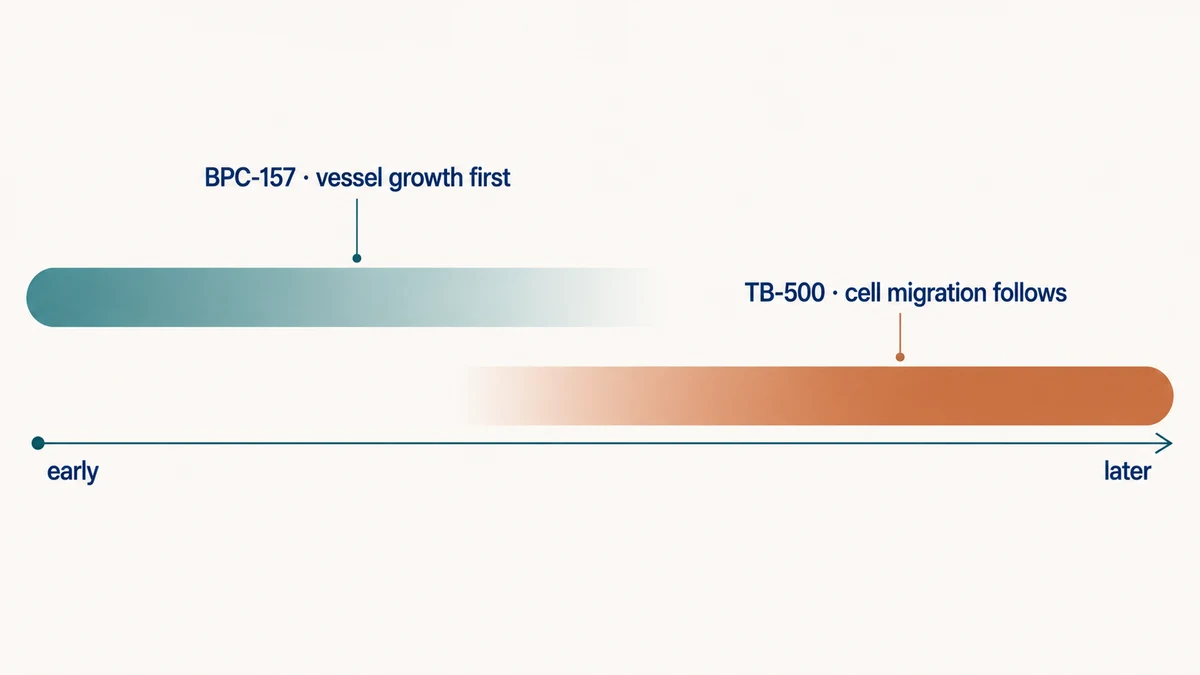
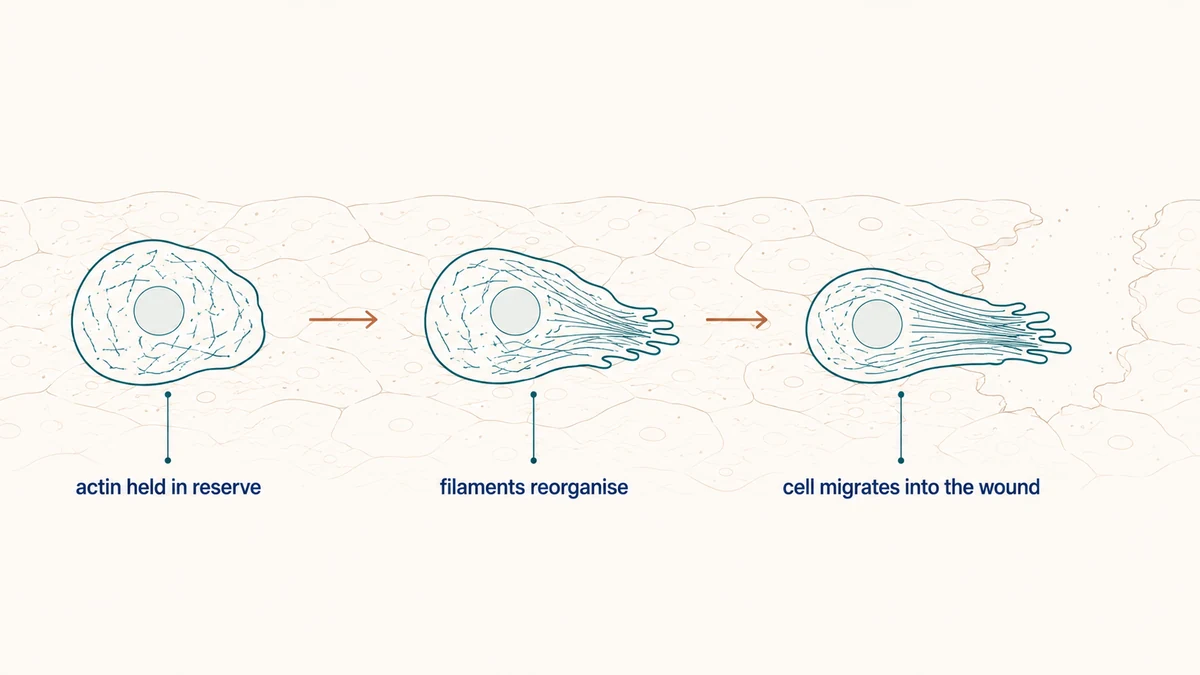
BPC-157 acts primarily through VEGFR2-driven angiogenesis and EGR-1 / FAK-paxillin signaling, while TB-500 (a thymosin-beta-4 fragment) acts via actin-cytoskeleton remodeling and cell migration. The two peptides are commonly studied together in stacking protocols because the mechanisms are complementary rather than overlapping.
Is BPC-157 orally active in research models?
Yes - BPC-157 is unusual among peptides in being stable in human gastric juice for over 24 hours, and oral administration in rats produces measurable repair effects. Most published protocols still use IP, SC, or IM injection because dose precision is higher, but oral activity is a documented property of the molecule.
How long do BPC-157 effects last after a single dose?
Plasma half-life in rats is approximately 4 minutes, but downstream effects on VEGFR2 signaling, EGR-1 transcription, and tissue repair persist for hours to days. The dissociation between circulating half-life and biological duration is one of the most studied features of the peptide.
What purity standard should research-grade BPC-157 meet?
Reputable research suppliers certify BPC-157 at >=99% purity by HPLC, with identity confirmed by mass spectrometry on a per-batch basis. Always review the Certificate of Analysis for the specific lot before incorporating the peptide into a study protocol.
Where can I learn more about BPC-157 research protocols?
Start with the Sikiric group reviews (2018, 2022) for the foundational mechanism literature, then read Chang et al. (2014) and Gwyer et al. (2019) for the in vitro fibroblast work. Our research section covers stacking strategies, storage, and related peptides in additional depth.
Scientific References
- Seiwerth S, Brcic L, Vuletic LB, et al. BPC 157 and standard angiogenic growth factors. Gastrointestinal tract healing, lessons from tendon, ligament, muscle and bone healing. Curr Pharm Des. 2018;24(18):1972-1989. PMID: 29998800[PubMed Reference]
- Chang CH, Tsai WC, Lin MS, et al. The promoting effect of pentadecapeptide BPC 157 on tendon healing involves tendon outgrowth, cell survival, and cell migration. J Appl Physiol. 2011;110(3):774-780. PMID: 21030672[PubMed Reference]
- Chang CH, Tsai WC, Hsu YH, Pang JH. Pentadecapeptide BPC 157 enhances the growth hormone receptor expression in tendon fibroblasts. Molecules. 2014;19(11):19066-19077. PMID: 25415472[PubMed Reference]
- Keremi B, Lohinai Z, Komora P, et al. Antiinflammatory and cytoprotective activities of BPC-157. Curr Pharm Des. 2018;24(18):1990-2001
- Sikiric P, Rucman R, Turkovic B, et al. Novel cytoprotective mediator, stable gastric pentadecapeptide BPC 157. Vascular recruitment and gastrointestinal tract healing. Curr Pharm Des. 2018;24(18):1990-2001. PMID: 29879879[PubMed Reference]
- Gwyer D, Wragg NM, Wilson SL. Gastric pentadecapeptide body protection compound BPC 157 and its role in accelerating musculoskeletal soft tissue healing. Cell Tissue Res. 2019;377(2):153-159. PMID: 30915550[PubMed Reference]
- Sikiric P, Skrtic A, Gojkovic S, et al. Cytoprotective gastric pentadecapeptide BPC 157 resolves major vessel occlusion disturbances, ischemia-reperfusion injury following Pringle maneuver, and Budd-Chiari syndrome. World J Gastroenterol. 2022;28(1):23-46. PMID: 35125818[PubMed Reference]
- Vukojević J, Milavić M, Perović D, et al. Pentadecapeptide BPC 157 and the central nervous system. Neural Regen Res. 2022;17(3):482-487. PMID: 34380875[PubMed Reference]
- Sikiric P, Skrtic A, Gojkovic S, et al. Stable gastric pentadecapeptide BPC 157 as a therapy: from gastric ulcer to multi-organ injury. Curr Med Chem. 2022;29(11):1845-1872
Related Research Peptides
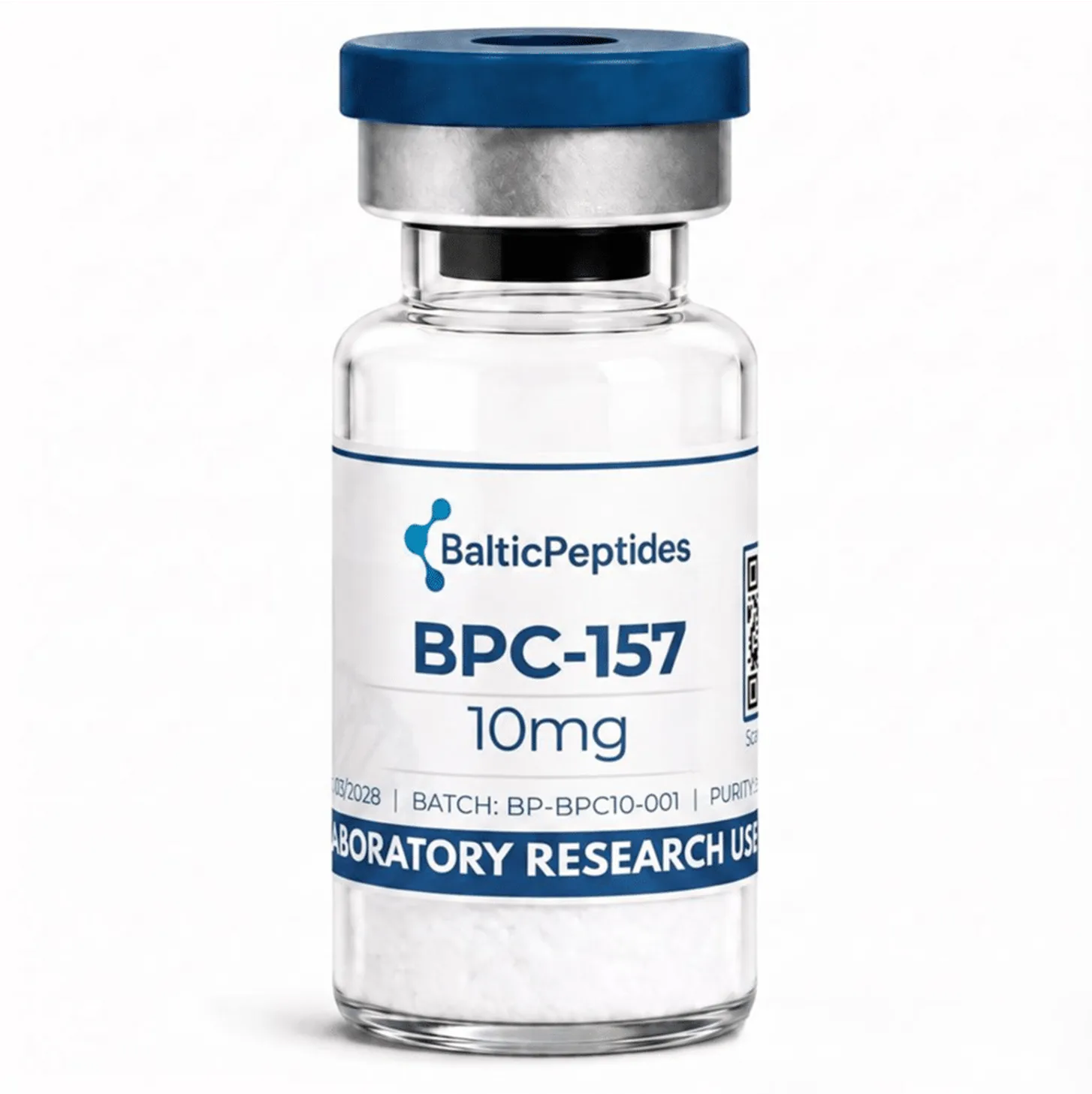
BPC-157
TB-500